
Skip to content
Event Forensics™

What Is Event Forensics? A Guide for Marketing Executives Planning Conferences

Magdalena Bonnelly
Magdalena Bonnelly

A marketing executive’s introduction to Event Forensics™

For many marketing leaders, a conference is one of the most visible, expensive, and high-pressure initiatives of the year.

It is not “just an event.”

It is brand credibility.
It is customer experience.
It is executive visibility.
It is pipeline influence.
It is community-building.
It is sponsor management.
It is content, reputation, and revenue all showing up in one room.

And yet, after the event ends, most companies move on too quickly.

The team is exhausted. The invoices are still coming in. The venue wants final payment. The AV company sends a bill that looks different from the original quote. The hotel room block report is buried in someone’s inbox. The executive team wants to know whether the event was “worth it.” And the marketing team is already being asked to start planning next year.

So the same thing happens again.

The next conference gets planned using last year’s assumptions, last year’s vendors, last year’s budget structure, and last year’s habits.

But what if last year’s event was trying to tell you something?

That is where Event Forensics™ comes in.

What Is Event Forensics™?

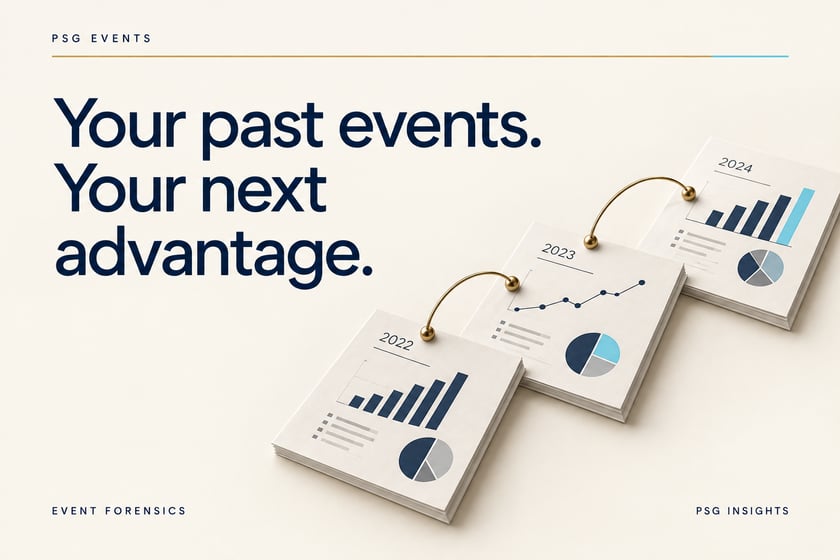
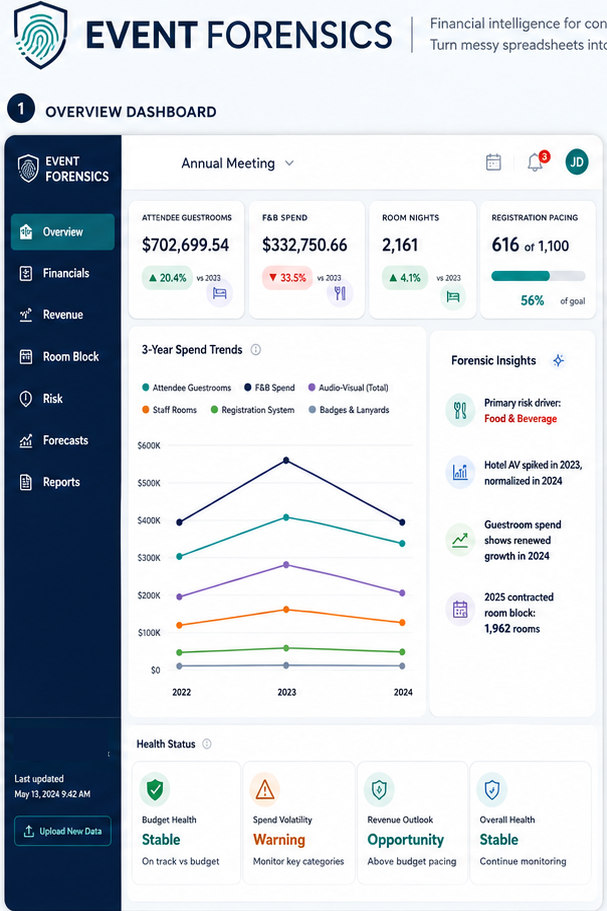
Event Forensics™ is a structured review of your past conferences to uncover what actually happened financially, operationally, and strategically.

It looks at the details most teams do not have time to examine after the event is over:

  • Venue contracts
  • Hotel invoices
  • AV quotes and final bills
  • Food and beverage orders
  • Room block pickup
  • Attrition exposure
  • Registration numbers
  • Sponsor commitments
  • Vendor performance
  • Budget versus actual spend
  • Cost per attendee
  • Year-over-year changes
  • Hidden fees, service charges, and late-stage cost increases

Instead of treating the post-event phase as a wrap-up, Event Forensics treats it as a source of intelligence.

The goal is not to criticize the event team. In most cases, the team did an incredible job under pressure.

The goal is to answer a better question:

What can this event teach us before we plan the next one?

Why Marketing Executives Should Care?

Marketing leaders are often responsible for the event outcome, even when they do not control every piece of the event.

You may own the brand experience, audience strategy, messaging, sponsorship goals, executive visibility, customer engagement, and sales alignment. But the success of the event can also depend on hotel contracts, AV scope, food and beverage minimums, labor charges, production timelines, vendor communication, and room block management.

That creates a dangerous gap.

The marketing team is accountable for the result, but the operational and financial details are scattered across vendors, contracts, invoices, spreadsheets, and inboxes.

Event Forensics™ closes that gap.

It gives marketing executives a clearer view of what worked, what created risk, what cost more than expected, and what should change before the next planning cycle begins.
Blog Image


The Problem With Traditional Post-Event Debriefs

Most post-event debriefs focus on surface-level questions:

Did attendees like it?
Did the speakers show up?
Did the room look good?
Did the executive team feel positive?
Did we stay close to budget?
Should we use the same venue again?

Those questions matter, but they are not enough.

A conference can look successful and still have major financial leakage behind the scenes.

The attendee experience may have been strong, while the AV budget quietly increased by 40%. The room block may have looked manageable, while attrition risk was narrowly avoided. The food and beverage minimum may have been met, but only through last-minute upgrades that the team did not actually need. Sponsor deliverables may have been fulfilled, but with too much manual coordination and no scalable process.

Traditional debriefs usually capture how the event felt.

Event Forensics™ captures what the event revealed.

When Should You Use Event Forensics?

Event Forensics is especially useful when:

  • You are planning a recurring annual conference
  • Your event budget is increasing
  • Your internal team is stretched
  • Your last event felt more expensive than expected
  • You are preparing for a new venue search
  • You are about to issue an RFP
  • Your AV or production costs were hard to understand
  • Your executive team wants better reporting
  • You are trying to professionalize your event operations
  • Your conference has become too important to manage casually

The most valuable moment to use Event Forensics™ is before planning the next event.

That is when the findings can actually influence decisions.

What Marketing Leaders Get From Event Forensics™?

At the end of an Event Forensics™ review, marketing executives should have a clearer understanding of:

  • What the last event actually cost?
  • Where the budget changed?
  • Which vendors performed well?
  • Which categories need tighter control?
  • What should be negotiated differently?
  • How the attendee count affected spend?
  • How to create a stronger budget for the next event?
  • Where internal processes need improvement?
  • What leadership should know before approving the next conference?

In other words, Event Forensics™ turns past-event data into next-event strategy.

The Bottom Line

Marketing executives are under pressure to create conferences that are memorable, measurable, and financially responsible.

But you cannot improve what you cannot see.

If your team is planning the next conference using old assumptions, scattered spreadsheets, and incomplete post-event notes, you may be carrying forward the same hidden problems year after year.

Event Forensics™ helps you stop guessing.

It gives you a clearer view of what happened, what changed, what leaked money, what created risk, and what should be done differently next time.

Before you plan the next conference, find out what the last one was trying to tell you.

Planning a conference, summit, or high-visibility brand event?

PSG’s Event Forensics™ process helps marketing leaders uncover the financial, operational, and vendor insights hidden inside past events — before the next planning cycle begins.

Start with an Event Forensics™ Audit Call and find out where your next event may be most exposed.

Share this post